Taking Jesus Seriously

Contact
Share ...
sausages graphic sausages graphic

Part 4 - Redefining God's Character


tjs background graphic
Sidebox rgc.jpg graphic for section 1

Now With Your First Century Jewish Mindset...

...join the crowd on the mountainside! If you don't have one, then please read the previous part entitled "The First Century Jewish Mindset".

So it was that the crowd and the disciples on the mountainside, listening to Jesus first sermon, were familiar with Deuteronomy 28, with its fourteen verses of blessing, and its fifty-three graphic and detailed verses of cursing. Deuteronomy 28 is their mental picture of God. So when Jesus begins with eleven verses of blessings - the beatitudes - they are probably expecting at least fifty verses of cursing. But there is no cursing. Instead what follows is a shocking, systematic reinterpretation of the law, like they have never heard.

In reinterpreting Old Testament law, Jesus at some points, set the bar higher ... exposing MOTIVES. For example,

“You have heard that it was said, ‘You shall not commit adultery.’ But I tell you that anyone who looks at a woman lustfully has already committed adultery with her in his heart."
or
"You have heard that it was said to the people long ago, ‘You shall not murder, and anyone who murders will be subject to judgment.’ But I tell you that anyone who is angry with a brother or sister will be subject to judgment."

In other places in this disturbing sermon, Jesus completely refutes the law by turning it around. Let me give you some examples:

Those listening on the mountainside have been taught from Deuteronomy ...

If you make a vow to the Lord your God, you shall not delay fulfilling it..."

But Jesus says,

"Again you have heard that it was said to those of old, ‘You shall not swear falsely, but shall perform to the Lord what you have sworn.’ But I say to you, Do not take an oath at all ... Let what you say be simply ‘Yes’ or ‘No’; anything more than this comes from evil."

And those in the crowd had learned from Deuteronomy this foundational principle of retributive justice,

"Show no pity: life for life, eye for eye, tooth for tooth, hand for hand, foot for foot."

But then they hear Jesus say ...

"You have heard that it was said, ‘Eye for eye, and tooth for tooth.’ But I tell you, do not resist an evil person. If anyone slaps you on the right cheek, turn to them the other cheek also."

The disciples are shocked of course.

Background graphic for section 2:rain_in_the_street.jpg

They've Never Heard Anything Like This

Because Jesus is not simply giving them a kinder set of rules to live by. He is redefining the character of God! Deuteronomy 28 paints a picture of a God who is both psychologically capable and determined to exact the cruellest most disgusting punishment and vengeance on anyone who does not love him. This is the image of God that the disciples have grown up with - learned at their mother's knee. Scriptures read by their fathers, by their priests.

I wonder what image of God you have grown up with. Maybe the Old Testament verses of a vengeful God in whose presence you would be terrified, have stuck in the back of your mind. Maybe somehow you have managed to carry this dual image of a God who claims to be love, yet decides to keep people in hell forever, with no remission. Maybe you too need to hear what Jesus is saying - redefining the image of God.

You may ask, 'Is Jesus really doing that? Is He really telling us that God is not vengeful, that Almighty God turns the other cheek when slapped in the face?'

Yes - let us check what Moses' law states, and then compare it to Jesus very own words. Firstly Deuteronomy 28...

1 If you fully obey the Lord your God and carefully follow all his commands ...
12 The Lord will open the heavens, the storehouse of his bounty, to send rain on your land in season and to bless all the work of your hands.
15 ... if you do not obey the Lord your God and do not carefully follow all his commands ...
23 The sky over your head will be bronze, the ground beneath you iron.
24 The Lord will turn the rain of your country into dust and powder; it will come down from the skies until you are destroyed.

Now listen to what Jesus says ...

"But I tell you, love your enemies and pray for those who persecute you ...

Wait for it!! Don't miss this ...

... so that you may be children of your Father in heaven.
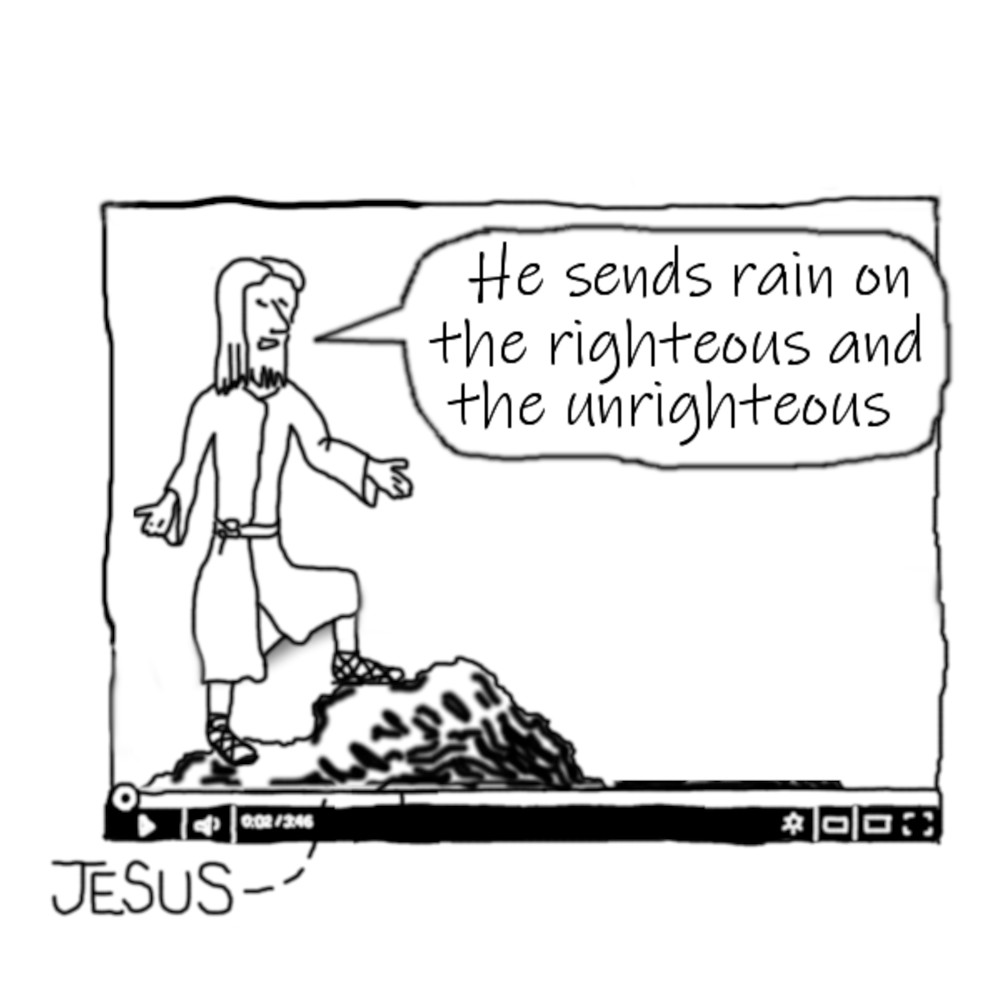
He causes his sun to rise on the evil and the good, and sends rain on the righteous and the unrighteous!

It is a direct and clear contradiction of the principle of holy vengeance which Deuteronomy 28 so clearly describes.

We haven't maybe noticed this before because we're not first century Jews, who have been schooled in the synagogue, with an Old Testament mindset, but this sermon on the mount is a redefinition of the character of God.

The clearly stated principle in the law is that God will respond to obedience with blessing, and to disobedience with cursing, misery and destruction. But Jesus is radically and fundamentally amending the law.

So how do we deal with that?

Background graphic for section 3:jesus_in_synagogue.jpg

What Is Jesus' Rationale?

Sometimes, he is deleting parts, reversing or upholding parts, emphasising or augmenting parts of the law. Are we to assume that any parts of the law he didn't mention just stay the same? And how do we bear in mind that this is a representation of the heart of God, and that as we read scripture, it is to bring us to a knowledge of God?

It is no surprise to see that in every case, it is that agape love for people, seeking always to restore, to renew, to encourage and forgive. This is what shapes Jesus interpretation. Jesus amends the law of Moses to eliminate those parts that destroy, that degrade, that dehumanise, that seed any bitterness and hatred and terror of God. Jesus highlights good motives and pure hearts. He removes those phrases that alienate and tear people down, and emphasises those phrases that reconcile and build people up.

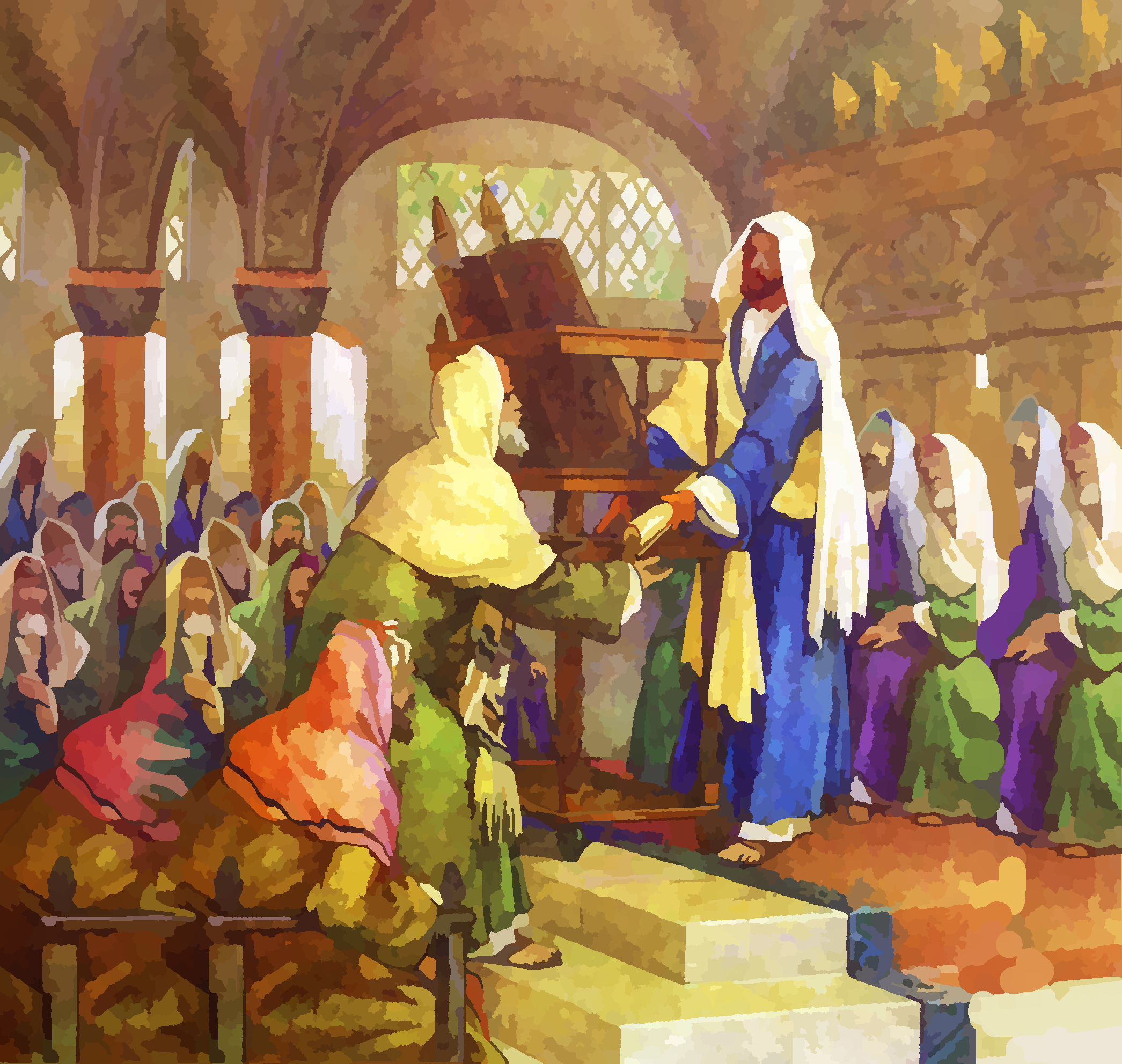
It shouldn't be a surprise, because it fits with Jesus inaugural scripture reading in the synagogue of his home town Nazareth ...

You remember?

"The Spirit of the Lord is on Me, because He has anointed Me to preach good news to the poor. He has sent Me to proclaim liberty to the captives and recovery of sight to the blind, to release the oppressed, to proclaim the year of the Lord’s favor..."

And then all eyes are on him, as he rolls up the scroll, puts it back on the shelf, and sits down. They are all thinking, 'He's stopped in the middle of the sentence! Why is He not going to read the last part - you know, the part where our enemies get it!

"and to proclaim the day of vengeance of our God..."

Spending time on rolling the scroll, and taking his seat, it is clear that the gospel writer very much wants us to notice the fact that Jesus deliberately omitted the part about vengeance.

Consider Paul. As a man steeped in the Old Testament law, Deuteronomy 28 was his mindset, his picture of God, and it led him to violently repress, persecute and murder others. In slaughtering Christians who refused to unquestioningly obey the Hebrew Bible, he was literally following the law of Moses.

On the road to Damascus, the Holy Spirit showed Paul that the law and the prophets give us a distorted view of God - like looking into an extremely poor quality first century mirror, made of beaten metal. Paul was converted away from that violent religion, and understood that God IS love. Later, writing to the Corinthian church, Paul says 'When I was a child, I talked, walked, behaved like a child. But now I'm an adult. I've got rid of those childish things.' Love, says Paul, does not dishonour others, is not self-seeking, it keeps no record of wrongs, it always protects, always trusts, always hopes, always perseveres. Love, says Paul, (and he's talking about God's love) - love never fails.

So in light of all that, how should we read scripture? Because we need to read scripture - all of it!

A widely held traditional view is that Jesus can remove those passages from the law, because he carries the curse of God's law for us on the cross, hence there is no need for that law to apply to us. The rationale would be that Jesus Christ suffered under the vengeful retribution of God, on our behalf.

But is that right?

Background graphic for section 3:vengeance_agape .jpg

Well, There Is A Problem

Because this interpretation maintains that Deuteronomy 28 is said still to represent the character of God, which is utterly at odds with what we see of the character of the incarnate God in Christ. Scripture tells us,

'In him dwelt all the fulness of the Godhead bodily'.

If you can't see it in Jesus, it isn't in God.

A careful reading of the writings of St Paul, which comprise much of the New Testament, shows that he does exactly the same thing as Jesus. Paul reinterprets the law in the light of the revelation that God is love, all love. Multiple times in his letters, Paul specifically chooses to quote violent and vengeful Old Testament passages and in quoting them, he deliberately and blatently omits the violent and vengeful parts.

OK, so if we want to read scripture the way Jesus read scripture (and who wouldn't?), we now know we neither have to obey, nor condone those parts that degrade, destroy, humiliate, and dehumanise. It's okay! That's the way Jesus read it. That's the way Paul read it. So that's how we can read it.

And this is how Paul describes God's character...

Read it and re-read it until it begins to grip you. Be convinced that God is exactly like Jesus Christ, who gave everything for you. Experience again in increasing measure, that truth "we love Him because he first loved us". Read about how Jesus treated people like you and I, healing, washing feet, pouring out his time and energy and ultimately his life.

Love is patient.
Love is kind.
It does not envy. It does not boast. It is not proud.
It does not dishonour others. It is not self-seeking.
It is not easily angered. It keeps no record of wrongs.
Love does not delight in evil but rejoices with the truth.
Love always protects,
always trusts,
always hopes,
always perseveres.
Love never fails.

Let that sink in - Love never fails!

End graphic or Divider graphic

.

Error.
Real contents are missing.
Necessary padding text to presize the scrollable div
Error.
Real contents are missing.
Necessary padding text to presize the scrollable div
Error.
Real contents are missing.
Necessary padding text to presize the scrollable div
Error.
Real contents are missing.
Necessary padding text to presize the scrollable div
Error.
Real contents are missing.
Necessary padding text to presize the scrollable div
Error.
Real contents are missing.
Necessary padding text to presize the scrollable div
Error.
Real contents are missing.
Necessary padding text to presize the scrollable div
Error.
Real contents are missing.
Necessary padding text to presize the scrollable div
Error.
Real contents are missing.
Necessary padding text to presize the scrollable div
Error.
Real contents are missing.
Necessary padding text to presize the scrollable div
Error.
Real contents are missing.
Necessary padding text to presize the scrollable div
Error.
Real contents are missing.
Necessary padding text to presize the scrollable div
Error.
Real contents are missing.
Necessary padding text to presize the scrollable div
Error.
Real contents are missing.
Necessary padding text to presize the scrollable div
Error.
Real contents are missing.
Necessary padding text to presize the scrollable div
Error.
Real contents are missing.
Necessary padding text to presize the scrollable div
Error.
Real contents are missing.
Necessary padding text to presize the scrollable div
Error.
Real contents are missing.
Necessary padding text to presize the scrollable div
Error.
Real contents are missing.
Necessary padding text to presize the scrollable div
Get the whole chapter